
Laravel5.4注册登录解析及使用教程
一.说明
马上就要出5.5Laravel版本了,据说这是继5.1LTS之后第二个LTS版本。不过今天的重点是说一下5.4版本的注册以及登陆。我们知道在Laravel5.2版本开始,Laravel框架就自带了登录注册功能。5.1是没有的,当然今天要说的是5.4.不过先说一下这几个版本的差距,小小提一下5.2之中的
Route::controllers([]);
这个使用方法已经废除了。其他的核心内容差距不大。下面开始5.4版本。防止有些同学刚接触,我们从头说起。
二.开始
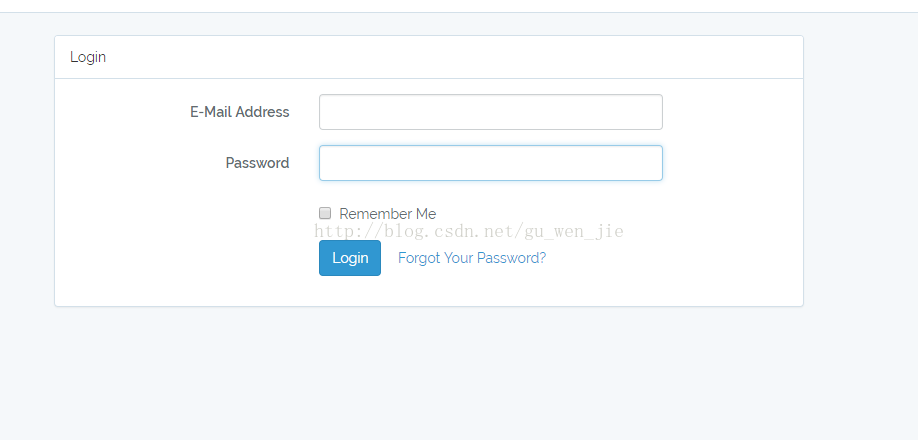
1.下载5.4Laravel框架,推荐是使用composer,不懂得可以看Laravel第一篇怎么使用composer。直接在终端你的存放项目的路径下输入composer create-project --prefer-dist laravel/laravel 项目名称想要下载制定版本的可以百度Laravel学院或者Laravel中国,两个比较权威的Laravel社区。2.快速生成认证所需要的路由和视图(相关的artisan命令可自行百度学习)php artisan make:auth这时候你会发现你的appHttpControllers目录下多了一个Auth文件夹,就是刚刚生成的以及resourcesviews目录下多了一个home.blade.php文件和一个存储认证需要的试图文件。相关的路由也已经为你全部生成,在routes目录下的web.php文件中。databasemigrations目录下会有两个数据表迁移文件,暂时不用理会干嘛用的。3.数据库迁移填充。这一块留到以后详细说明。现在你只需要在根目录路径下在终端中运行。这个命令平时不要随便使用,它是回滚再重新运行所有迁移的 migrate:refresh 命令来填充数据库。这个命令在彻底重构数据库时非常有用。php artisan migrate:refresh --seed这样你的数据库中就生成了两个目前有用的表,一个users,一个password表。还有一个,不用理会。前提是你有一个数据库,在根目录下的.env文件中配置即可,没有的话就把.env.axample文件复制一份改名为.envDB_CONNECTION=mysql DB_HOST=127.0.0.1 DB_PORT=3306 DB_DATABASE=laraveldb DB_USERNAME=root DB_PASSWORD=root如果你需要表前缀,可在config/databases.php文件中设置。4.现在一切就绪,在你自己的开发环境之中配置好访问名称(建议配置到public目录中的index.php,有利于Laravel的安全机制保护代码)。按照路由文件中的路由访问/home或者可以直接访问/login。你会看到这样一个类似页面
就来到了登陆页面。我们先说注册这一块。
三.注册
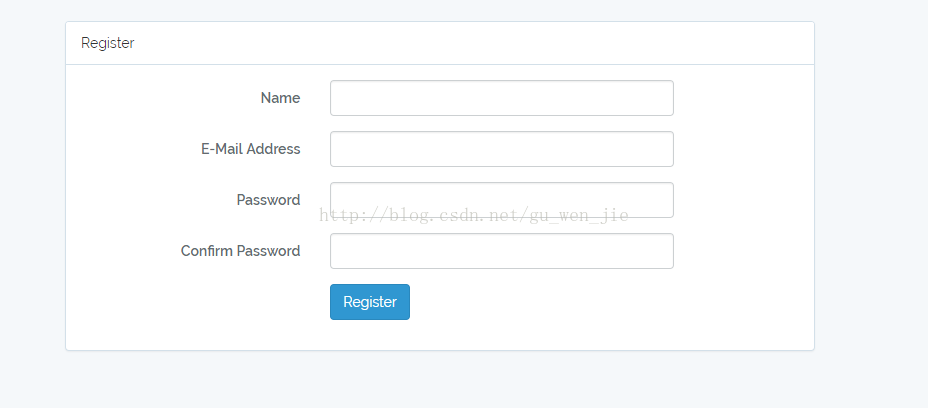
1.点击右上角的Register按钮来到注册页面。
怎么来到这个页面的呢。我们可以看路由文件中Auth::routes();发现和我们平时写的路由不太一样。它其实是定义在vendor/laravel/framework/src/Illuminate/Support/Facades/Auth.php文件中。这里我建议大家使用PHPStrom编辑器啊。按住Ctrl+鼠标左键可以追踪类,方法等的源文件其他有相同功能的也可以,个人喜好。/** * Register the typical authentication routes for an application. * * @return void */ public static function routes() { static::$app->make("router")->auth(); }这里调用了了 IlluminateRoutingRouter 这个类,再调用里面的 auth() 方法。它存放在vendor/laravel/framework/src/Illuminate/Routing/Router.php文件中。内容量很多,大概在1005行。/** * Register the typical authentication routes for an application. * * @return void */ public function auth() { // Authentication Routes... $this->get("login", "AuthLoginController@showLoginForm")->name("login"); $this->post("login", "AuthLoginController@login"); $this->post("logout", "AuthLoginController@logout")->name("logout"); // Registration Routes... $this->get("register", "AuthRegisterController@showRegistrationForm")->name("register"); $this->post("register", "AuthRegisterController@register"); // Password Reset Routes... $this->get("password/reset", "AuthForgotPasswordController@showLinkRequestForm")->name("password.request"); $this->post("password/email", "AuthForgotPasswordController@sendResetLinkEmail")->name("password.email"); $this->get("password/reset/{token}", "AuthResetPasswordController@showResetForm")->name("password.reset"); $this->post("password/reset", "AuthResetPasswordController@reset"); }这里定义了登陆 、 退出 、注册 和 密码重置 的路由。我们可以看到其中Registration Routes...这部分就是注册的路由。2.开始注册我们看到上方的不管是get或者post方法注册都走了AuthRegisterController控制器。我们可以到appHttpControllersAuth的下面打开RegisterController控制器
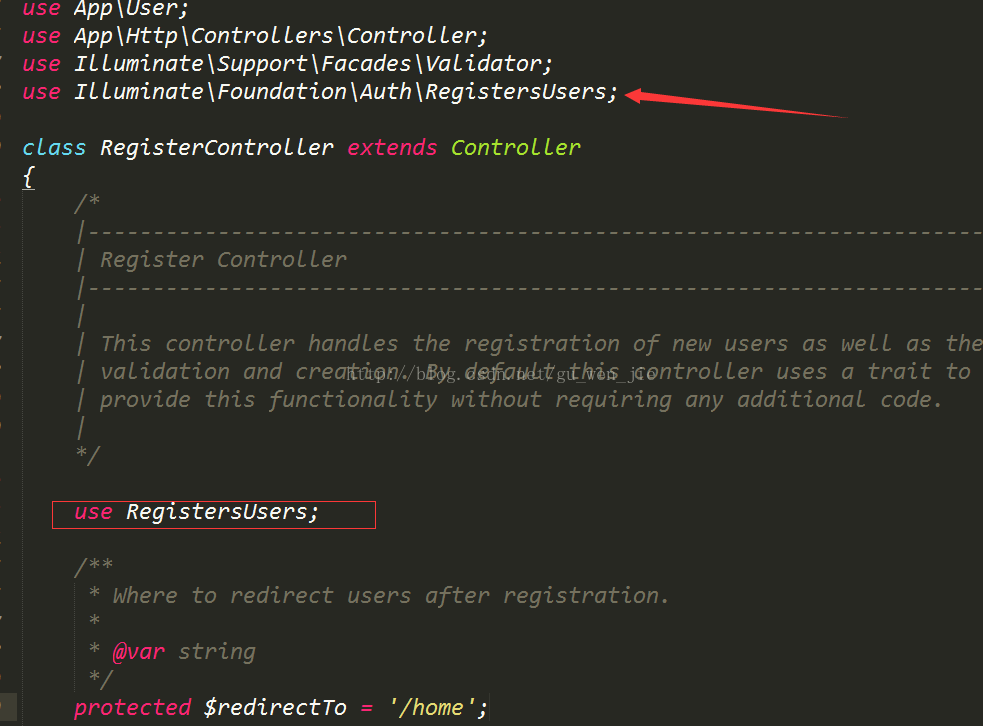
这个RegistersUsers定义在vendorlaravelframeworksrcIlluminateFoundationAuthRegistersUsers.php文件中use RedirectsUsers; /** * Show the application registration form. * * @return IlluminateHttpResponse */ public function showRegistrationForm() { return view("auth.register"); }看这个地方
/register走的showRegistrationForm()方法来到注册视图页面。然后通过post方法提交:register(Request $request)方法/** * Handle a registration request for the application. * * @param IlluminateHttpRequest $request * @return IlluminateHttpResponse */ public function register(Request $request) { $this->validator($request->all())->validate(); event(new Registered($user = $this->create($request->all()))); $this->guard()->login($user); return $this->registered($request, $user) ?: redirect($this->redirectPath()); }首先调用validator()返回一个验证对象,再调用 validate() 验证表单内容是否被规则允许。AppHttpControllersAuthRegisterController/** * Get a validator for an incoming registration request. * * @param array $data * @return IlluminateContractsValidationValidator */ protected function validator(array $data) { return Validator::make($data, [ "name" => "required|string|max:255", "email" => "required|string|email|max:255|unique:users", "password" => "required|string|min:6|confirmed", ]); }假如你的注册表单中需要加入其他字段,如性别等,需要在这里添加字段规则验证上面这个方法返回一个对象。然后我们看到一个 new Registered($user = $this->create($request->all())这个执行事件其实是在$this->guard()->login($user);后面执行的。等同于$this->guard()->login($this->create($request->all()));this->guard() 又会去调用 vendorlaravelframeworksrcIlluminateFoundationAuthRegistersUsers.php 里的 guard()方法/** * Get the guard to be used during registration. * * @return IlluminateContractsAuthStatefulGuard */ protected function guard() { return Auth::guard(); }这里直接return Auth::guard();返回一个默认的 guard ,在config/auth.php中配置。这里不展示了可以自行查看。接下来执行了括号中的$this->create($request->all())。create()方法在AppHttpControllersAuthRegisterController.php中。/** * Create a new user instance after a valid registration. * * @param array $data * @return AppUser */ protected function create(array $data) { return User::create([ "name" => $data["name"], "email" => $data["email"], "password" => bcrypt($data["password"]), ]); }同上:假如你的注册表单中需要加入其他字段,如性别等,需要在这里添加字段最后调用一个redirect()方法;该方法也在vendorlaravelframeworksrcIlluminateFoundationAuth目录下是,不过在RedireectsUsers.php中/** * Get the post register / login redirect path. * * @return string */ public function redirectPath() { if (method_exists($this, "redirectTo")) { return $this->redirectTo(); } return property_exists($this, "redirectTo") ? $this->redirectTo : "/home"; }我们看到用了一个三元运算符判断,如果定义了redirectTo属性就返回这个属性定义的值,不然就返回/home.最终注册完成。

四.登陆
1.挺长时间了,今天赶快把登陆部分给补上~~~2.首先登陆部分的路由部分和(三.注册-1)相同,可以回过头看下那部分代码。3.通过代码我们知道登陆认证走的认证路由是:
$this->get("login", "AuthLoginController@showLoginForm")->name("login"); $this->post("login", "AuthLoginController@login");4.登陆控制器所在的文件是:vendor/laravel/framework/src/Illuminate/Foundation/Auth/AuthenticatesUsers.php5.登陆方法:/** * Show the application"s login form. * * @return IlluminateHttpResponse */ public function showLoginForm() { return view("auth.login"); }/** * Handle a login request to the application. * * @param IlluminateHttpRequest $request * @return IlluminateHttpRedirectResponse|IlluminateHttpResponse */ public function login(Request $request) { $this->validateLogin($request);//数据验证 // If the class is using the ThrottlesLogins trait,we can automatically throttle // the login attempts for this application.We"ll key this by the username and // the IP address of the client making these requests intothis application. if ($this->hasTooManyLoginAttempts($request)) { $this->fireLockoutEvent($request); return $this->sendLockoutResponse($request); } if ($this->attemptLogin($request)) { return $this->sendLoginResponse($request);//身份验证 } // If the login attempt was unsuccessful we willincrement the number of attempts // to login and redirect the user back to the login form.Of course, when this // user surpasses their maximum number of attemptsthey will get locked out. $this->incrementLoginAttempts($request); return $this->sendFailedLoginResponse($request); }
数据验证部分是该控制器下另一个方法,就是验证邮箱(用户名)和密码:/** * Validate the user login request. * * @param IlluminateHttpRequest $request * @return void */ protected function validateLogin(Request $request) { $this->validate($request, [ $this->username() => "required|string", "password" => "required|string", ]); }
身份验证是使用系统的guard方法进行认证:/** * Attempt to log the user into the application. * * @param IlluminateHttpRequest $request * @return bool */ protected function attemptLogin(Request $request) { return $this->guard()->attempt(//调取guard方法,往下找 $this->credentials($request), $request->has("remember") ); }/** * *中间忽略。。。 * *//** * Get the guard to be used during authentication. * * @return IlluminateContractsAuthStatefulGuard */ protected function guard() { return Auth::guard(); }
注意,上方使用的调取:$this->guard()->attempt
这个attempt方法指向:vendor/laravel/framework/src/Illuminate/Contracts/Auth/StatefulGuard.php中的attempt()方法
/**
 * Attempt to authenticate a user using the given credentials.
 *
 * @param  array  $credentials
 * @param  bool   $remember
 * @return bool
 */
public function attempt(array $credentials = [], $remember = false);
最终指向:vendor/laravel/framework/src/Illuminate/Auth/SessionGuard.php中的attempt方法
/**
 * Attempt to authenticate a user using the given credentials.
 *
 * @param  array  $credentials
 * @param  bool   $remember
 * @return bool
 */
public function attempt(array $credentials = [], $remember = false)
{
    $this->fireAttemptEvent($credentials, $remember);

    $this->lastAttempted = $user = $this->provider->
retrieveByCredentials($credentials);
// If an implementation of UserInterface was returned, we"ll ask the provider
// to validate the user against the given credentials, and if they are in
// fact valid we"ll log the users into the application and return true.
if ($this->hasValidCredentials($user, $credentials)) {
$this->login($user, $remember);
return true;
}
// If the authentication attempt fails we will fire an event so that the user
// may be notified of any suspicious attempts to access their account from
// an unrecognized user. A developer may listen to this event as needed.
$this->fireFailedEvent($user, $credentials);
return false;
}上方方法中调用了一个方法:
hasValidCredentials()
这个方法中调用了另一个方法:
validateCredentials($user, $credentials)
你如果使用的是PHPstorm编辑器,CTRL键+鼠标左键点击这个方法追踪会发现
它最终使用的是:vendor/laravel/framework/src/Illuminate/Auth/EloquentUserProvider.php中的validateCredentials方法
/**
 * Validate a user against the given credentials.
 *
 * @param  IlluminateContractsAuthAuthenticatable  $user
 * @param  array  $credentials
 * @return bool
 */
public function validateCredentials(UserContract $user, array $credentials)
{
    $plain = $credentials["password"];

    return $this->hasher->check($plain, $user->getAuthPassword());
}
最终进行密码验证,验证成功登陆。
声明:该文观点仅代表作者本人,入门客AI创业平台信息发布平台仅提供信息存储空间服务,如有疑问请联系rumenke@qq.com。